

















Open offices promised creativity and connection, but many teams now feel distracted, exposed, and overstimulated. At the same time, fully enclosed offices limit communication and reduce flexibility. Modern workplaces need a smarter middle ground. Cubicle layouts, when designed with intention, offer that balance by supporting focus without sacrificing collaboration.
Today’s cubicle systems look nothing like the rigid grids of the past. Bush Business Furniture carries modular solutions that adapt to different work styles, team sizes, and privacy needs. When organizations choose the right layouts, they create environments that improve productivity, protect concentration, and encourage meaningful interaction.
We’re taking a closer look at balancing privacy and collaboration with cubicle layouts and how to optimize cubicles to your team’s benefit. Each design idea and concept sheds light on how modern offices can continue adapting to the changing workforce.
Why Privacy and Collaboration Matter in Modern Offices
Knowledge work requires deep focus as well as frequent communication. Employees spend parts of their day collaborating with teammates and other moments concentrating on individual tasks. When an office design prioritizes one need at the expense of the other, performance can suffer.
A lack of privacy increases interruptions, raises stress levels, and reduces accuracy on complex tasks. Meanwhile, insufficient collaboration spaces slow decision-making and weaken team cohesion. Smart cubicle layouts solve this tension by defining personal work zones while keeping teams visually and physically connected.
Furniture choices can ultimately shape how people behave at work. When layouts respect different working modes, employees switch between focus and collaboration more naturally throughout the day.
Cubicle Layouts Have Evolved Beyond Traditional Designs
Traditional cubicles relied on uniform panels and fixed dimensions. Those layouts maximized density but ignored ergonomics, aesthetics, and adaptability. Modern systems take a slightly different approach.
Today’s cubicle layouts emphasize flexibility, visual openness, and personalization. Designers vary panel heights, integrate shared surfaces, and allow reconfiguration as teams grow or change. These systems support privacy without creating isolation.
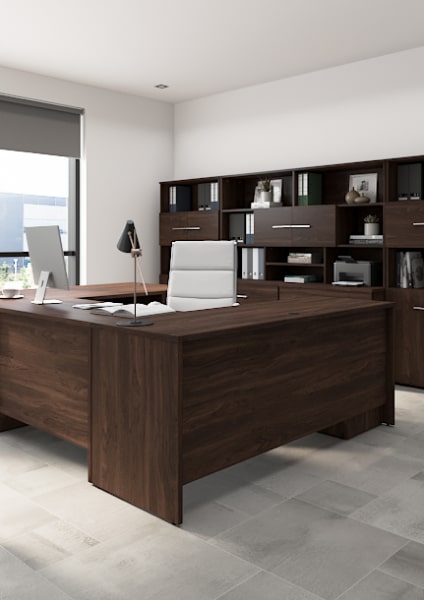
Bush Business Furniture provides excellent solutions that reflect this evolution by combining clean lines, durable materials and work surfaces, and modular components. The result feels intentional rather than restrictive—and far more aligned with contemporary work culture.

Use Panel Height Strategically To Control Focus and Interaction
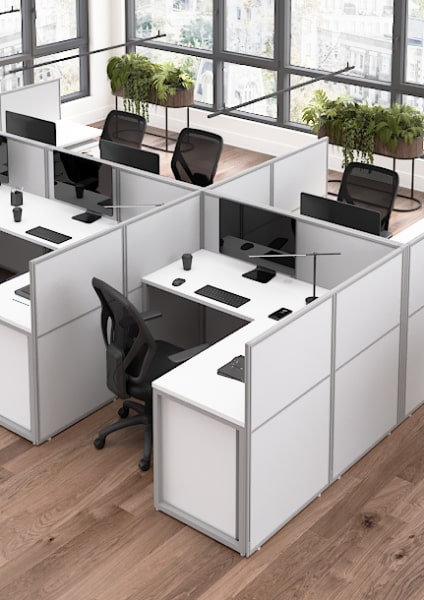
Panel height plays a central role in balancing privacy and collaboration. Tall panels block visual distractions and support focused tasks. Lower panels encourage eye contact, conversation, and team awareness.
We’re now seeing designers mix panel heights within the same workspace to support different roles and work styles. Employees who handle confidential information or analytical tasks benefit from higher panels. Teams that collaborate frequently perform better with lower divisions that maintain openness.
This layered approach allows offices to support multiple work modes without redesigning the entire floor. Furniture becomes a tool for behavior, not just a boundary.
Support Team Collaboration Without Sacrificing Personal Space
Collaboration does not require constant exposure. Well-designed cubicle layouts encourage interaction through proximity, shared surfaces, and intentional pathways rather than removing privacy altogether.
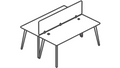
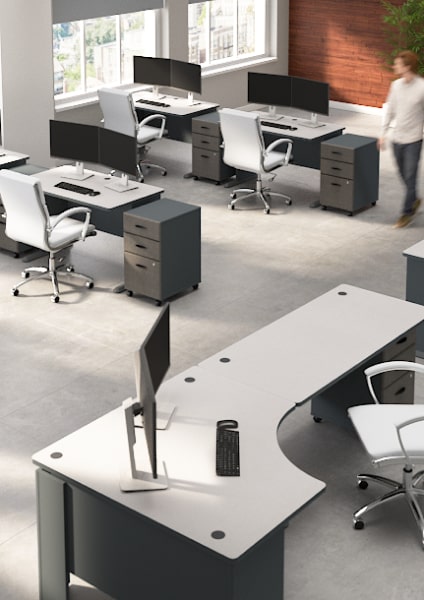
As such, workstations can include shared tables, mobile whiteboards, or connector desks that invite quick discussions. Employees collaborate easily without leaving their work zone or disrupting others
This approach works especially well in layouts that group teams together while still giving each person a defined personal area. Even within commercial cubicles, the right configuration fosters teamwork while preserving individual ownership of space.
Ergonomic Design as the Foundation for Productivity
Privacy and collaboration only work when employees feel physically comfortable. Ergonomic furniture supports posture, reduces fatigue, and improves focus throughout the workday.
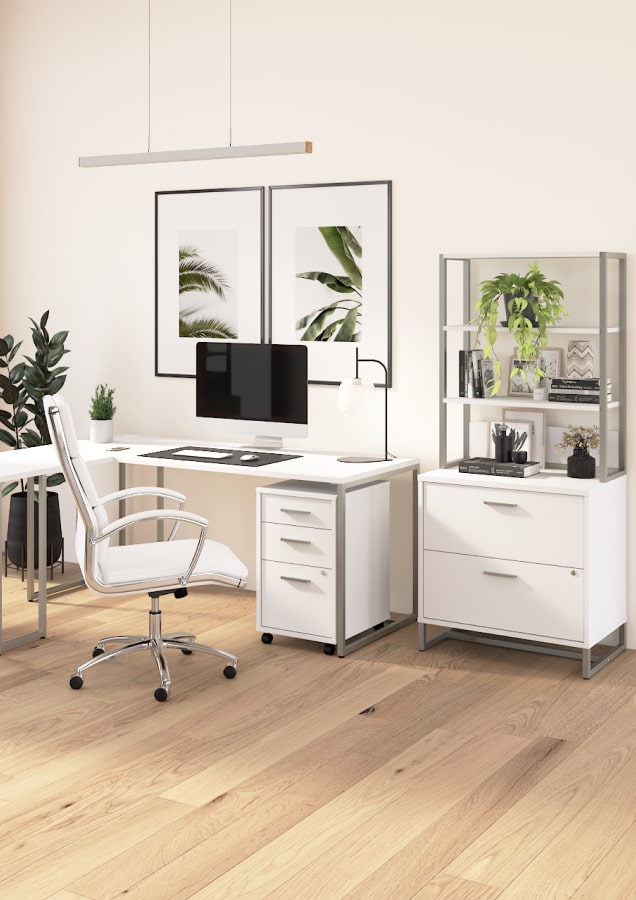
Cubicle layouts should accommodate adjustable seating, sit-stand desks, monitor arms, and accessible storage. When employees customize their workstation, they work more efficiently and experience fewer distractions caused by discomfort.
Bush Business Furniture prioritizes ergonomic design across its workstation systems. Adjustable components integrate seamlessly into cubicle layouts, allowing organizations to support employee wellness without compromising aesthetics or floor efficiency.
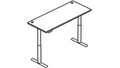
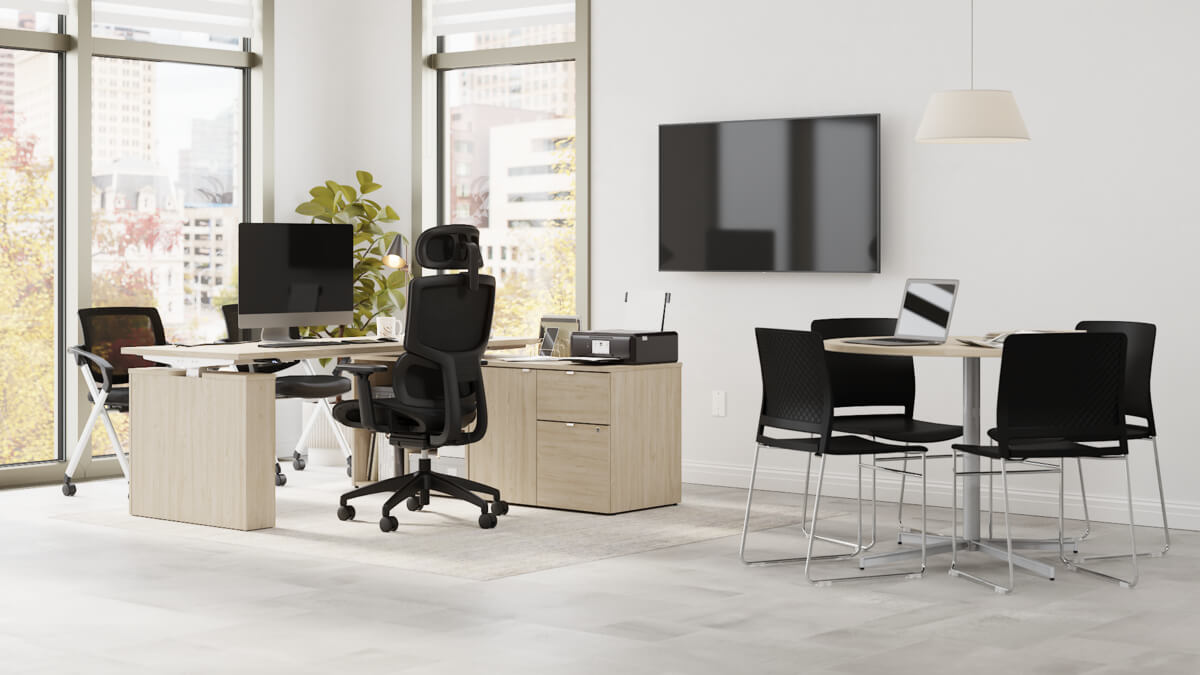
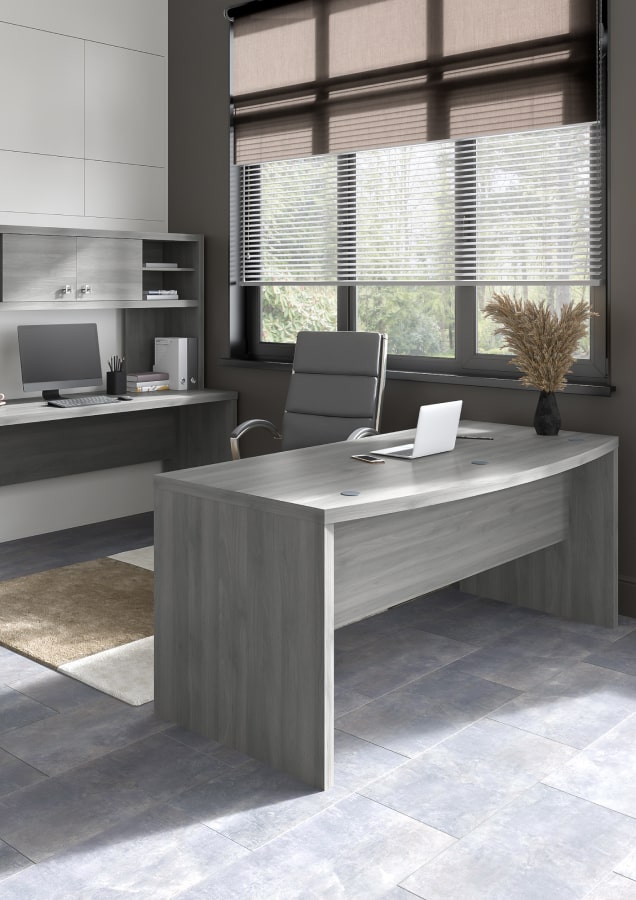
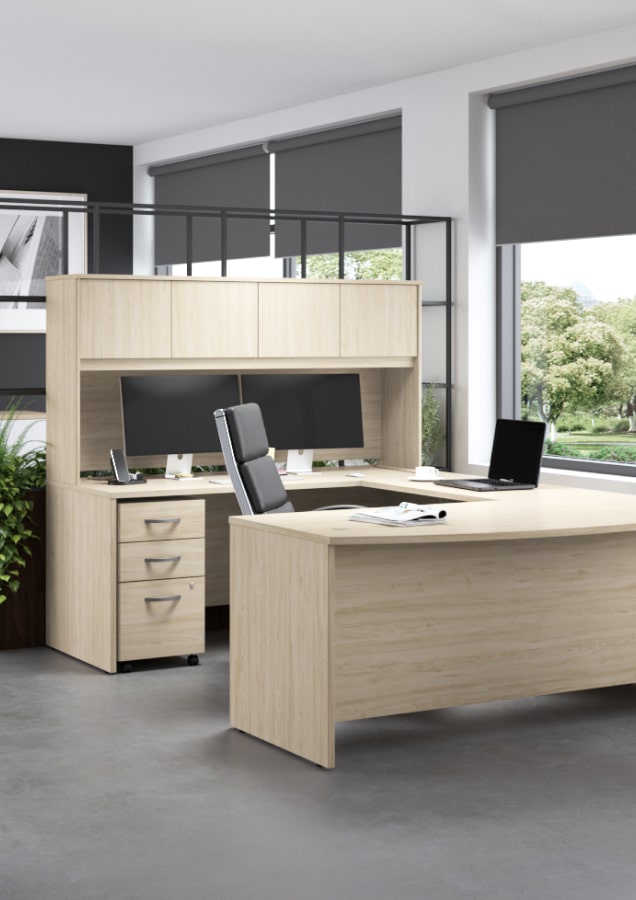
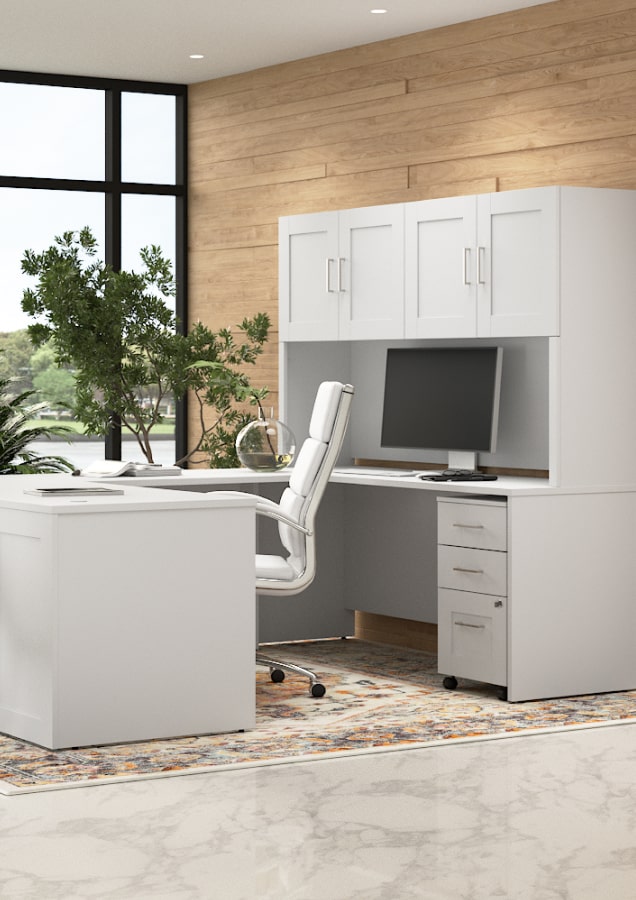
Our cubicle privacy panels are exceptional for creating defined spaces and allowing staff to use desks or workstations that serve them best. For example, a privacy panel paired with our Stratus adjustable-height L-shaped desk still falls in line with a collaborative, private, and functional work zone.
Acoustic Control as a Key Privacy Solution
Noise disrupts focus more than visual distractions in many offices. Cubicle layouts address this challenge through material choice and panel design rather than isolation.
Fabric panels absorb sound and reduce echo. Strategic spacing between workstations limits noise overlap. Even partial panels can dampen conversations without blocking light or airflow.
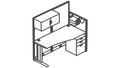
Acoustic performance becomes especially important in collaborative teams where frequent discussion occurs. By managing sound effectively, cubicle layouts protect individual concentration while still allowing teams to communicate naturally. This is another place our privacy panels can make a considerable difference in work productivity. We have shorter cubicle acoustic task boards and taller privacy panels, each perfect for noise dampening and acoustic control.
Flexibility and Scalability for Growing Organizations
Businesses change constantly, and office furniture must adapt just as quickly. Modular cubicle layouts allow organizations to reconfigure spaces without major renovations or downtime.
Companies can add workstations, adjust panel heights, or reorient layouts as teams expand or restructure. This flexibility protects long-term investment and supports evolving work strategies.
Modern cubicle systems support hybrid work models by allowing organizations to scale up or down efficiently. Our furniture solutions free companies of outdated, static layouts that no longer match how people work.

Design Principles for Balancing Privacy and Collaboration
Successful cubicle layouts follow consistent design principles that guide planning and purchasing decisions, such as:
- Define personal work zones while maintaining visual connection.
- Use varied panel heights to support different work styles.
- Integrate ergonomic adjustability into every workstation.
- Control noise through materials and spacing.
- Design layouts that reconfigure easily over time.
When organizations apply these principles, cubicle layouts become assets rather than compromises.
Furniture Selection Influences Business Outcomes
Office furniture influences productivity, retention, and employee satisfaction. Cubicle layouts that balance privacy and collaboration help employees work better and feel supported in their roles.
Bush Business Furniture provides workstation solutions with these outcomes in mind. Our cubicle systems combine durability, flexibility, and ergonomic performance to meet the needs of modern workplaces.
By investing in thoughtful layouts rather than default designs, organizations create environments that support both individual focus and team success—without forcing trade-offs that limit performance.


Leave a comment
This site is protected by hCaptcha and the hCaptcha Privacy Policy and Terms of Service apply.