

















School offices handle far more than administrative tasks. They coordinate communication, protect student information, manage finances, and support daily operations that keep learning on track. When storage does not match how each department works, small inefficiencies quickly turn into daily frustrations. Files pile up, supplies disappear, and staff spend valuable time searching instead of supporting students.
Planning school office storage based on department needs helps schools start the year organized and maintain consistency through busy semesters. Thoughtful storage planning improves retrieval speed, reduces clutter, and supports smoother workflows across every role in the building.
Bush Business Furniture supports schools with durable, easy-to-implement storage solutions designed for real-world use. By planning storage around how each department operates, schools create spaces that stay organized, adaptable, and ready for change. Let’s take a closer look at how to plan school office storage based on department needs and faculty functionality.
Understand How Each Department Uses Space Every Day
Effective storage planning starts with understanding daily behavior, not floor plans. Departments interact with paperwork, supplies, and shared tools in very different ways. A storage solution that works well in one office may create friction in another.
Administrative staff often access files dozens of times a day. Counselors move between confidential meetings. Finance teams rely on structured documentation under strict timelines. Support staff need quick access to tools and manuals. Storage must reflect these differences.
Before selecting cabinets or shelving, observe how staff move, what they reach for most often, and where clutter tends to build. Storage that mirrors real workflows helps staff stay focused and reduces unnecessary movement throughout the day.
Administrative Offices Need Centralized, High-Access Storage
Front offices act as the operational center of a school. Staff members handle attendance, enrollment, phone calls, and family communication, often all at once. Storage in these spaces must support speed, accuracy, and clarity.
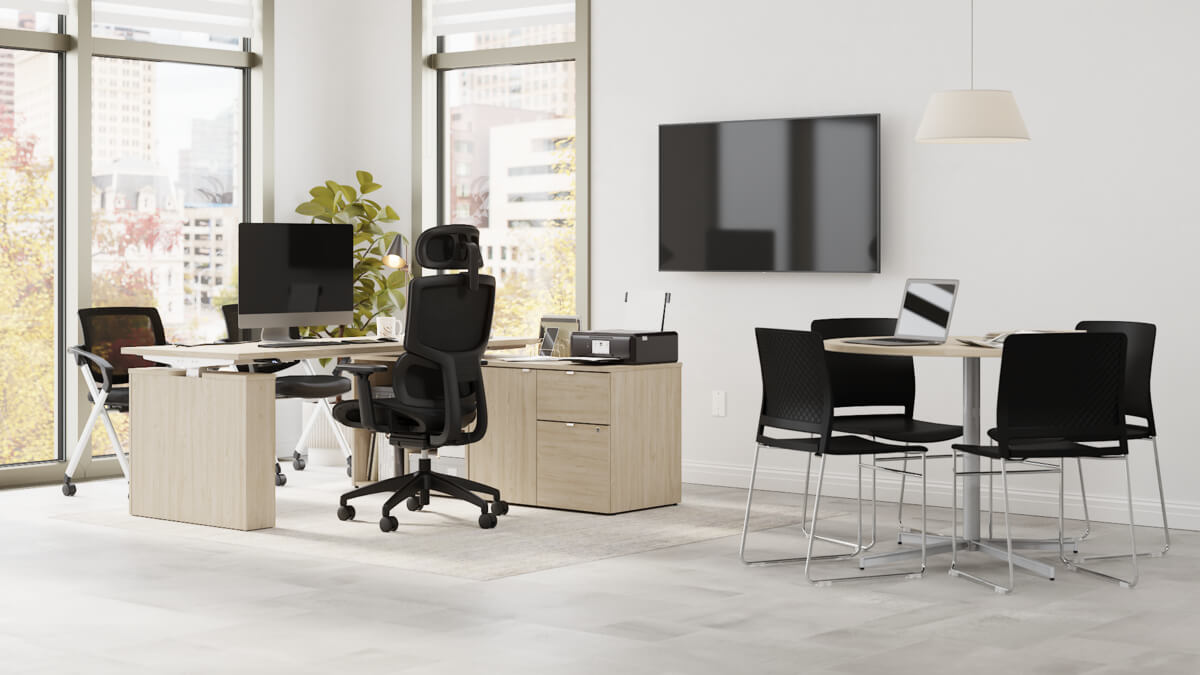
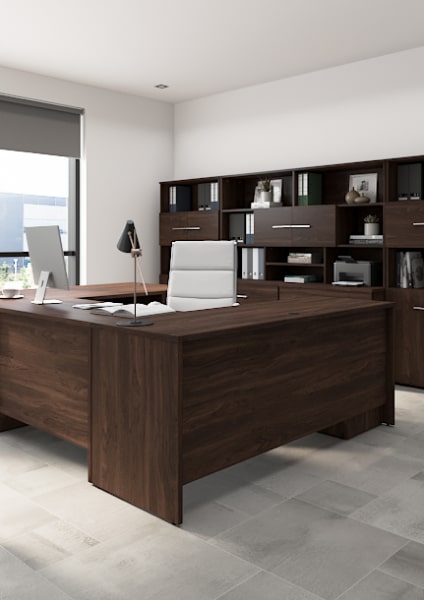
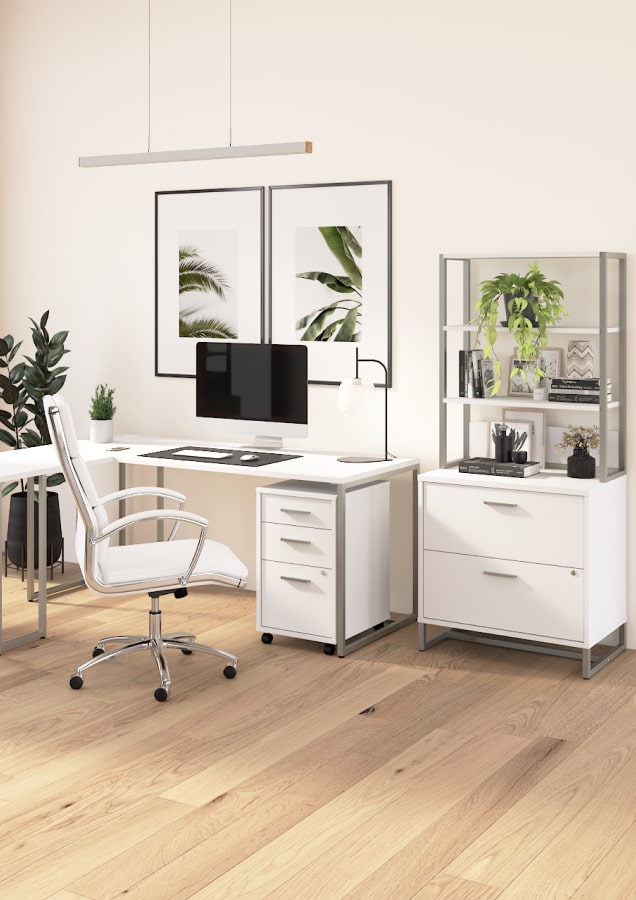
Centralized filing systems allow staff to retrieve documents without leaving their desks. Credenzas and tall cabinets help contain supplies and paperwork that would otherwise spread across countertops. When everything has a defined place, front offices stay calm even during peak traffic periods.
Well-planned storage also improves the experience for visitors. Families notice when offices feel organized and welcoming, especially during enrollment season or high-volume times of year.

Counseling and Student Services Require Secure and Discreet Storage
Counseling and student services teams manage sensitive information every day. Storage planning in these offices must prioritize confidentiality while maintaining ease of access for staff. Our Vista and Assure lines have excellent vertical, locking storage cabinets perfect for these demands.
Lockable cabinets and enclosed filing systems protect student records and personal documentation. Vertical storage solutions work especially well in counseling offices, where space often feels limited. By storing files upward instead of outward, staff preserve floor space for meetings and movement.
Placing secure storage near workstations allows counselors to transition smoothly between appointments. Thoughtful layouts support privacy, professionalism, and trust, which remain essential in student-facing roles.
Academic Department Offices Benefit From Shared Storage Systems
Department offices serve as collaboration hubs for teachers and academic staff. These spaces support lesson planning, curriculum coordination, and shared resources. Storage should encourage organization without isolating materials behind individual desks.
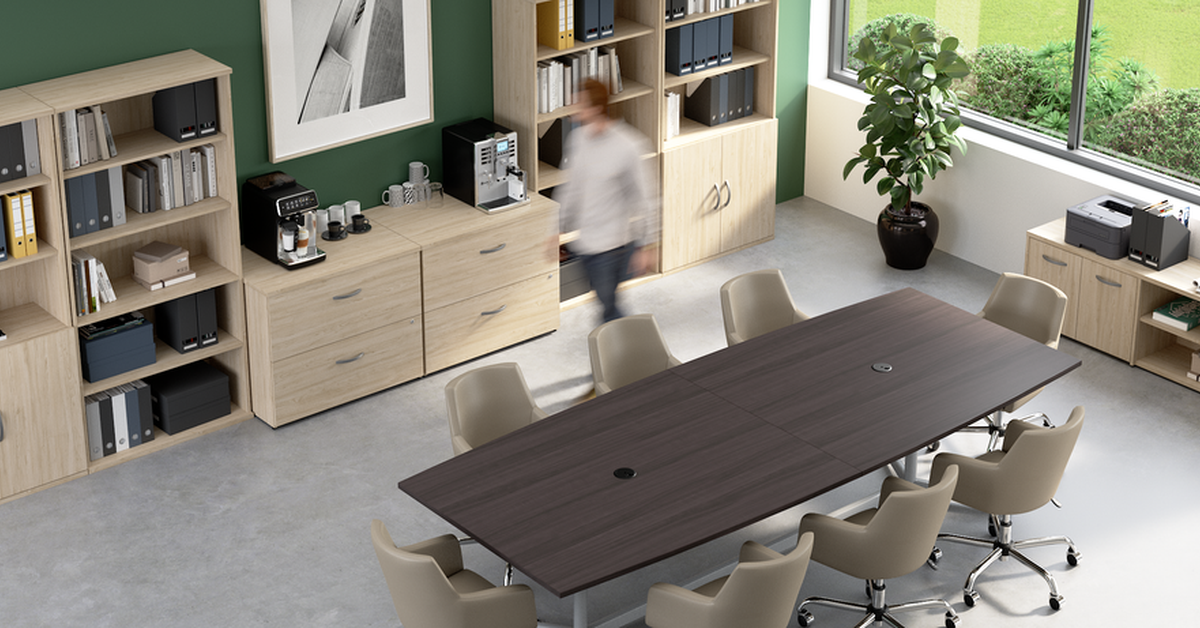
Shared cabinets and shelving systems allow teams to group materials by subject, grade, or term. Modular storage helps departments adjust layouts as staffing or instructional needs evolve throughout the year.
When departments rely on shared storage, teachers spend less time searching for materials and more time collaborating. Organized spaces also make onboarding new staff easier without requiring a full reconfiguration of the room.
Finance and Records Departments Depend on Consistent Organization
Finance and records teams manage documentation that demands accuracy and consistency. Storage planning in these areas should focus on structure, predictability, and long-term reliability.
Lateral files, clearly labeled drawers, and uniform cabinet layouts help staff retrieve documents quickly during audits, reporting cycles, and budget reviews. A consistent storage system reduces the risk of misplaced records and minimizes errors under pressure.
Stability matters in these departments. Storage solutions that remain consistent year after year preserve institutional knowledge, even as staff roles change over time. Due to the personal nature of financial and department records, consider investing in Assure line keypad entry storage solutions. This eliminates the need for a key and allows administers to give the code to specific personnel on an as-need basis.
Support and Operations Teams Need Accessible Storage
Facilities, IT, and operations teams rely on fast access to tools, equipment, and reference materials. Storage in these areas must prioritize visibility and durability.
Open shelving allows staff to identify items at a glance. Heavy-duty cabinets support frequent use without sacrificing organization. Clearly defined storage zones help teams return items to the correct place quickly.
When support spaces stay organized, response times improve across the school. Staff avoid unnecessary delays and maintain smoother daily operations behind the scenes.

Storage Planning Principles That Work Across All Departments
While each department has unique requirements, several storage strategies improve organization throughout the building. These principles create consistency while allowing flexibility where needed:
- Group storage by task instead of by supply type.
- Keep frequently used materials within easy reach.
- Use vertical space to reduce surface clutter.
- Include lockable options for sensitive documents.
- Allow extra capacity for seasonal and enrollment changes.
Applying these principles helps every department maintain order without constant reorganization.
Plan for Growth With Flexible, Long-Term Solutions
Schools rarely stay static. Enrollment changes, new programs launch, and staffing needs shift over time. Storage planning that only addresses current needs often leads to overcrowded cabinets and improvised solutions within a few short years.
BBF carries storage solutions that support expansion and reconfiguration. Modular components allow schools to adjust layouts without replacing entire systems. Durable construction supports daily use while maintaining a professional appearance throughout the school year.
When schools plan for adaptable office storage, they reduce long-term costs and avoid disruption during periods of change. Thoughtful planning ensures departments remain organized even as demands grow.
Effective storage planning supports every role in the building. When departments rely on commercial office storage that aligns with their workflows, schools experience faster retrieval, less clutter, and smoother daily tasks from the first day of school through the last. Shop online with Bush Business Furniture for reliable storage solutions for every department of your school organization.


Leave a comment
This site is protected by hCaptcha and the hCaptcha Privacy Policy and Terms of Service apply.